We live in a world where technology is changing everything. Cars are going electric, businesses are going digital, and AI is transforming how we work.
But one thing will always remain essential: Food.
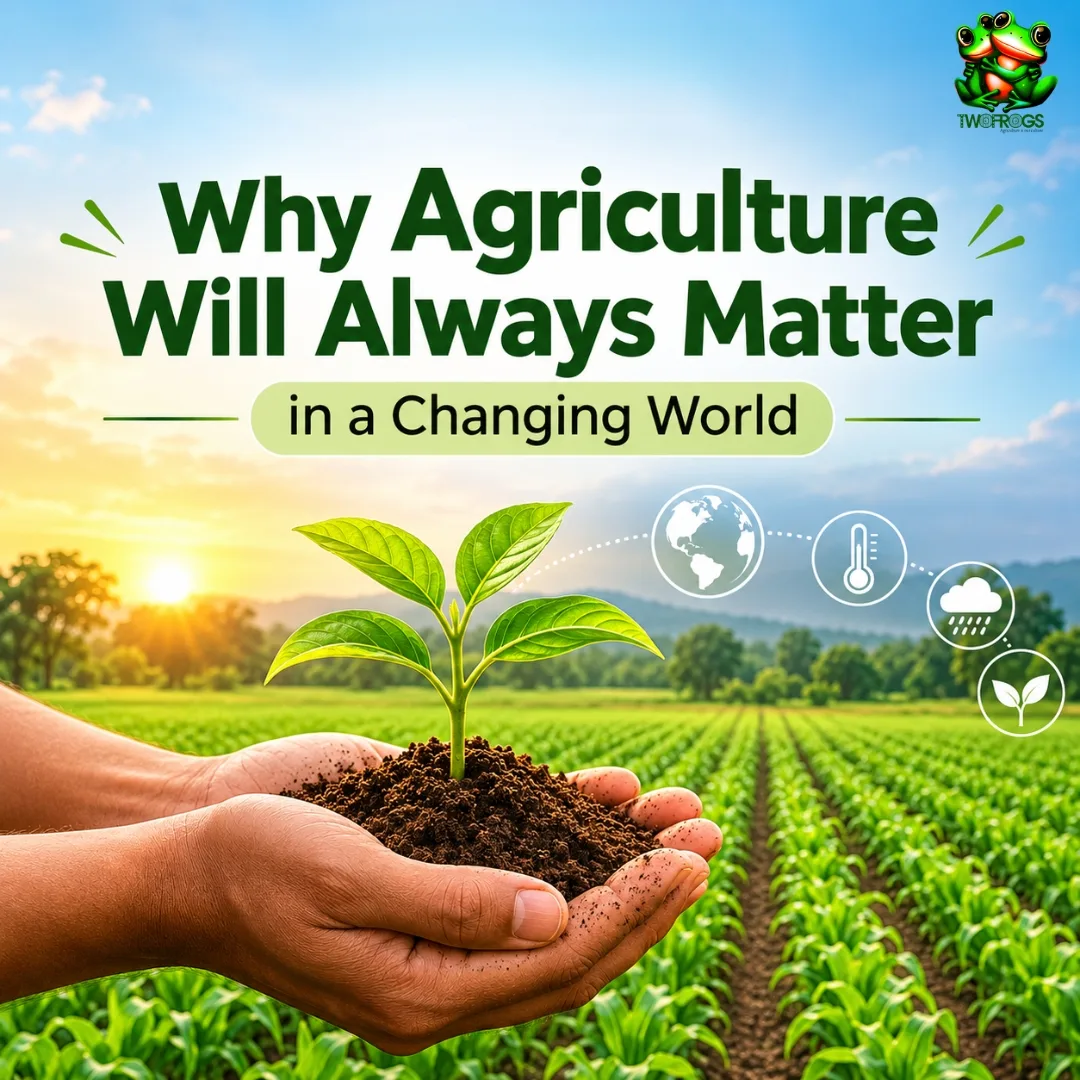
Behind every meal are farmers, agricultural land, water, sunlight and hard work. No matter how advanced the world becomes, agriculture remains fundamental to human survival.
And just like the world, agriculture is evolving too, with smart irrigation, precision farming and sustainable cultivation shaping its future.
A. Food Is Not a Trend. It Is a Necessity.
Fashion, technology and consumer trends may change, but one need will always remain: Food. Agriculture is the backbone of our food supply, providing the essentials we depend on every day. From morning coffee to evening meals, agriculture touches every part of our lives. As highlighted in the FAO's 2025 report, rising food prices continue to challenge global food security, making agriculture more important than ever—not just to produce food, but to make it accessible, affordable and sustainable.
B. Agriculture Is More Than Farming. It Is an Economic Engine.
Agriculture supports an extensive ecosystem of industries, including:
· Food processing and packaging.
· Transportation and agricultural logistics.
· Dairy, poultry and fisheries.
· Horticulture and fruit cultivation.
· Agricultural equipment and machinery.
· Fertilizer, seeds and irrigation technology.
· Agri-tech startups and supply-chain businesses.
C. The Future of Agriculture Is Becoming Smarter
Modern agriculture is evolving with technology, from soil moisture sensors and smart irrigation to drones and satellite monitoring. These innovations help farmers monitor crops, use water efficiently, identify problems early and manage farms more effectively. This is no longer science fiction; it is the future of farming.
· Precision Agriculture
Precision agriculture uses data, sensors, GPS and other technologies to help farmers make more informed decisions about their fields.
It can support better management of water, fertilizers and other agricultural inputs.
· Smart Irrigation
Smart irrigation systems help manage water more efficiently by considering soil moisture, weather conditions and crop requirements.
This is particularly important in regions where water availability is limited.
· Drones and Satellite Monitoring
Drones and satellite imagery can help monitor crop health, identify potential problems and observe large agricultural areas.
· Artificial Intelligence in Farming
AI-based tools can assist with weather forecasting, pest identification, crop monitoring and agricultural decision-making.
These developments demonstrate an important shift.
The future of farming does not necessarily mean working harder. It means using knowledge, technology and better planning to work smarter.
Agriculture is not being replaced by technology. It is learning to grow with it.
D. What Does the Future of Agriculture Look Like?
Here are five important developments to watch:
1. Technology-driven farming: Greater use of sensors, automation, drones and AI-supported decision-making.
2. Climate-resilient agriculture: More attention to suitable crop varieties, soil health and water conservation.
3. Diversified agricultural businesses: Growing interest in horticulture, livestock, fisheries and value-added agricultural products.
4. Better supply-chain connections: Improved storage, processing, logistics and direct market access.
5. Professional farm management: More structured approaches to plantation development, irrigation, maintenance and agricultural operations.
E. Conclusion: The World May Change, But Our Need for Agriculture Never Will
We may live in smarter cities and a world powered by AI, but we will always need farmers, fertile soil, clean water and healthy crops.
Agriculture is not just part of our past; it is essential to our future. The question is how we adapt and contribute to a more sustainable agricultural ecosystem.
At TwoFrogs Managed Farmland, we believe the future may be digital, but our roots will always be natural.
Own the land. Stay connected to nature. Let TwoFrogs take care of the farm.
Explore TwoFrogs Managed Farmland and discover a new way to reconnect with agriculture and nature.
References and Research Sources
1. Economic Survey 2025–26 – Government of India: Agriculture's contribution to national income, employment, agricultural growth and sectoral challenges. https://www.indiabudget.gov.in/economicsurvey/
2. FAO – The State of Food Security and Nutrition in the World 2025: Global food security, food-price inflation and access to nutritious diets. https://www.fao.org/agrifood-economics/publications/detail/en/c/1740904/
3. FAO – Sustainable Food and Agriculture: Information on sustainable agricultural systems and responsible food production. https://www.fao.org/sustainability/en/
4. Department of Agriculture and Farmers Welfare, Government of India: Official agricultural production estimates, crop statistics and agricultural information. https://desagri.gov.in/
5. OECD – Agricultural Policy Monitoring and Evaluation 2025: Agricultural policy, productivity, land resources and India's agricultural sector. https://www.oecd.org/en/publications/agricultural-policy-monitoring-and-evaluation-2025_354e7040.html